Fire & Smoke Damage Cleanup
What Can Be Saved After a House Fire in Denver? A Contents Restoration Guide
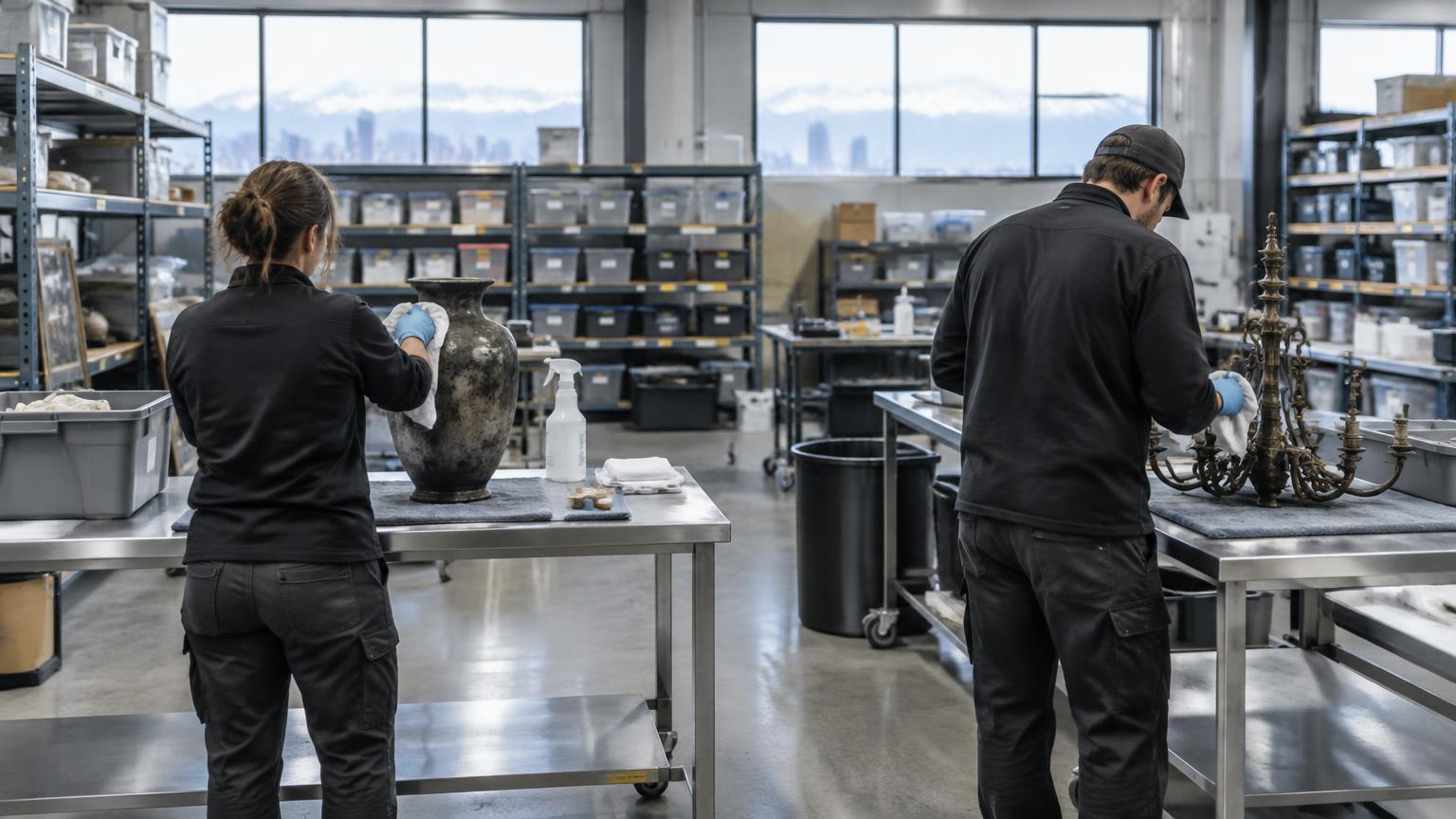
Many belongings can be saved after a house fire, including dishes, wood furniture, clothing, electronics, art, and photos. What can be restored depends on heat, soot, smoke, and the material itself. CRDN of Denver evaluates items individually after a fire or smoke loss, documenting what can be cleaned and what must be replaced. Do not assume that everything covered in soot is beyond saving.
What can usually be restored after a house fire?
Hard goods such as dishes and glassware, many textiles, solid wood furniture, and some electronics often have a path to restoration after a Denver house fire. Art, framed pieces, photographs, and paper goods need individual assessment. Whether an item comes back depends on direct heat damage, contamination, construction, and safe cleaning options.
A smoky plate and a charred cabinet are different problems. Nonporous surfaces can often be cleaned with a process selected for the residue. Clothes and household fabrics may need specialty washing and odor treatment rather than ordinary dry cleaning. Solid wood furniture may need careful cleaning and finish work. Upholstered pieces require separate attention to the frame and fabric, which CRDN routes to its content and textile teams. Decorative items, books, and heirlooms are examined for material-specific options before anyone promises a result.
For delicate framed pieces, read our smoke-damaged artwork guide. The clothing smoke odor guide covers a different set of materials and cleaning decisions. We serve homeowners in Denver, and insurance adjusters can review how we document contents for a claim on our adjuster page.
| Item type | Usually restorable? | Why |
|---|---|---|
| Dishes, glassware, and hard decor | Often | Hard surfaces can often be cleaned when they are not broken or heat-damaged. |
| Clothing and household textiles | Often | Specialty cleaning can address soot and smoke odor in fibers. |
| Solid wood furniture | Often, after assessment | Cleaning and finish work depend on heat and surface damage. |
| Electronics | Sometimes | Internal cleaning and full function testing are required before return. |
| Art, photos, and paper goods | Case by case | Materials and degree of damage determine the safe treatment. |
| Charred or melted goods | Usually not | Heat may have destroyed the item's structure or function. |
| Heavily contaminated porous goods | Often not | Contamination may be too deep for safe restoration. |
What usually cannot be saved after a fire?
Melted or charred belongings and heavily contaminated porous items usually cannot be returned safely to use. Food, cosmetics, and medications exposed to fire, heat, or smoke should not be treated as restoration candidates. Document them for your claim and ask your adjuster before disposal rather than putting them back into use.
A scorched finish is not the same as a structurally charred item. A specialist can separate cosmetic damage from material failure, but no cleaning process can undo melting or replace missing material. Porous goods deserve particular caution because residue can penetrate below the visible surface. Photograph each questionable item where it was found and keep its description with your inventory. That record helps your adjuster understand why one object was restored and a similar-looking one was not. Never discard a questionable item before it has been documented unless safety requires immediate removal.
Why does soot keep damaging belongings after the flames are out?
Soot can leave acidic residue on metal, glass, finished surfaces, and electronics. The residue does not stop acting when the fire is extinguished. Left in place, it can etch surfaces and corrode internal parts, while smoke odor remains embedded in textiles and other porous materials even after visible ash is gone.
That is why a quick wipe with a household cleaner is not a reliable test of whether something is saved. Different fire materials leave different residues. CRDN matches cleaning methods to the item and its contamination, routing hard contents to appropriate cleaning, textiles to dedicated processing, and specialty pieces to the right team. If the home also sustained water damage during firefighting, those items need moisture assessment too. The water damage contents guide covers what to document and protect when belongings are wet.
Should you turn on electronics to see if they survived?
No. A smoke-exposed device can look intact while residue sits inside its case. Powering it on before professional cleaning can cause a short or worsen corrosion. Leave the device unplugged, photograph it, and let the electronics team inspect, clean, and test its inputs and outputs before deciding whether it works safely.
CRDN of Denver tests every audio and video input and output of every device it restores, not just whether the power light turns on. That record matters to the homeowner and the adjuster. Read the smoke-damaged electronics guide for a closer look at the evaluation, or see the electronics restoration service for how devices are handled. Keep chargers and accessories with the device if they can be moved safely, and tell the crew if any piece was exposed to firefighting water as well as smoke.
What happens during a contents pack-out?
A pack-out is the documented removal of affected belongings so they can be cleaned, stored, and returned when the home is ready. CRDN photographs and catalogs items, assigns tracking barcodes, moves them to its own facility, then routes them to the appropriate restoration team. The inventory follows the items throughout the process.
Pack-out is not simply loading boxes into a truck. It creates a record of what left each room and helps separate restorable goods from items that need a total-loss evaluation. At the facility, hard contents, fabrics, electronics, and art follow different treatment paths. CRDN performs the work itself rather than handing it to subcontractors. Items go through quality checks before delivery, unpacking, and placement in the restored home. Ask how personal items you need sooner will be identified during the initial inventory.
How does an adjuster decide whether to restore or replace?
The adjuster reviews the loss, policy, inventory, and restoration assessment. Restoration is generally preferred when it costs less than comparable replacement and the item can be returned in working, acceptable condition. An item that cannot be cleaned or has been destroyed by heat is documented for a replacement decision instead.
A useful assessment explains the item's condition before treatment, the work proposed, and the result of testing or inspection. The decision is not made by looking at soot alone. If an item has sentimental value, tell the team and your adjuster so it can be evaluated on its own merits rather than overlooked in a broad category. Policy terms and claim approval still govern what is covered. You can start with CRDN's content restoration service to arrange an inventory and item-by-item assessment after a fire.
Insurance claim questions, answered
- Can furniture be saved after a house fire?
- Many wood furniture and case goods can be assessed for cleaning and finish work. The answer depends on heat damage, soot, construction, and whether the item can be restored safely.
- Can smoke-damaged clothing be cleaned?
- Many garments and household textiles can be treated with specialty cleaning and deodorization. Ordinary washing or dry cleaning may not remove deeply embedded smoke odor.
- Should I turn on a TV after a house fire?
- No. Soot can settle inside electronics and cause corrosion or shorts. Leave devices unplugged until they have been professionally cleaned and tested.
- Can photos and artwork be saved after a fire?
- Sometimes. Art, photographs, and paper goods require individual assessment because the materials and degree of heat, smoke, or water damage vary.
- What happens to belongings that cannot be restored?
- Items that are charred, melted, or otherwise beyond safe restoration are photographed and itemized for the insurance adjuster's replacement review.
- Does an adjuster choose restoration or replacement?
- The adjuster reviews the policy and documentation. Restoration is generally preferred when it costs less than comparable replacement and the item can be returned in acceptable condition.
Keep reading
Electronics Restoration After Fire, Smoke & Water
Can Smoke-Damaged Electronics Be Restored? A Denver Owner's Guide
Smoke residue keeps eating electronics long after a fire. Here's how professional labs restore TVs, stereos, and computers, and what your policy pays for.
Read the guideWater Damage Contents Restoration
Water Damage in Denver: What to Do With Your Belongings in the First 48 Hours
The first 48 hours after a water loss decide what you keep and what you lose. A step-by-step Denver guide to protecting your belongings and your claim.
Read the guideFire & Smoke Damage Cleanup
Can Smoke-Damaged Artwork Be Restored? Denver Art Restoration After a Fire
Smoke on a painting is not the same as soot on glass. Learn how different artworks are assessed and what not to clean at home.
Read the guideFire & Smoke Damage Cleanup
How to Get Smoke Smell Out of Clothes After a Fire: What Works and What Does Not
Smoke odor can stay deep in fabrics after washing. Learn what to do before cleaning and how specialty textile treatment works.
Read the guide