
Water Damage Contents Restoration
Water Damage in Denver: What to Do With Your Belongings in the First 48 Hours
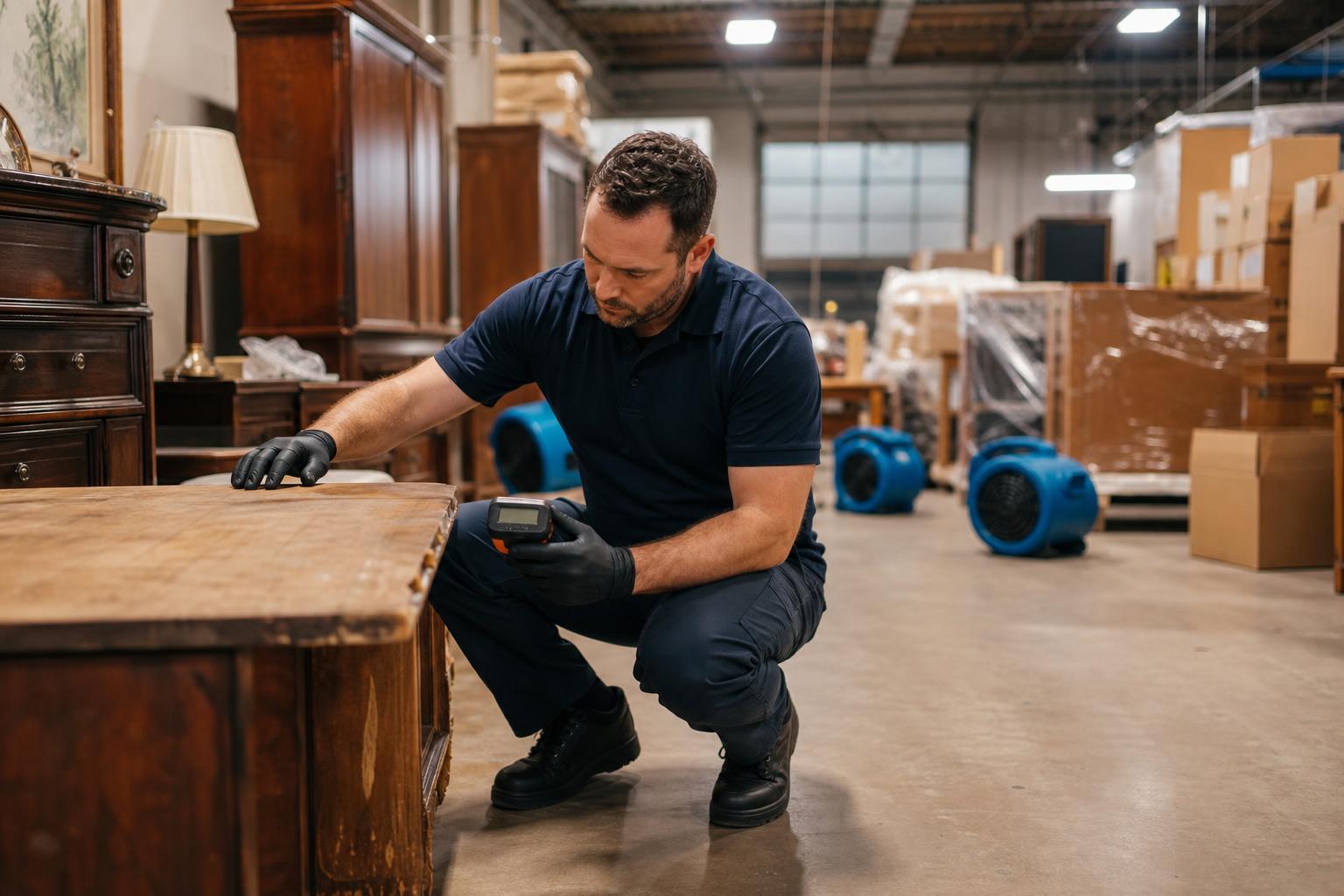
A burst supply line under a Denver kitchen sink can dump 200 gallons of water into a home in under an hour. By the time the water is shut off, the damage is rarely just the floor. It is the dresser two rooms away that wicked moisture through its base, the wedding album on the closet shelf, and the leather sofa that will grow mold within 48 hours if it is not moved and dried correctly. This guide walks through exactly what to do in the first 24 hours, what your insurance policy almost certainly covers, and how a professional contents restoration company saves items most homeowners assume are trash.
Hour 1: Stop the source and document everything
Before you touch a single belonging, shut off the water at the main and photograph every affected room from the doorway. Pictures taken before anything is moved are the single most useful piece of evidence your adjuster will ever see. Video is even better. Narrate what you see. Your claim will move faster and pay more accurately when the loss is documented before restoration begins.
Hours 2 to 24: Move the right items, in the right order
Wet contents fall into three buckets. Porous items like upholstery, mattresses, textiles, and paper begin absorbing water and growing microbial life almost immediately. Semi-porous items like wood furniture, leather, and cabinetry can usually be saved if they are dried within 48 hours. Non-porous items like ceramics, glass, and most electronics can wait a bit longer, but should still be moved to a dry space. Do not stack wet items. Do not put wet paper in plastic bags. Do not run a wet stereo to "test" it.
What insurance actually covers
Standard Colorado homeowner policies cover sudden and accidental water damage from plumbing failures, appliance failures, and roof leaks caused by covered perils. Contents coverage (Coverage C) typically sits at 50 to 70 percent of your dwelling coverage and pays to restore, clean, or replace personal property. Gradual leaks, seepage, and flood water from outside the home are usually excluded unless you carry separate flood insurance. Ask your adjuster about pack-out and storage coverage: it is almost always included and is what pays for a restoration company to inventory, remove, clean, and store your belongings while the structure dries.
What professional contents restoration actually does
A qualified restoration team arrives with moisture meters, drying chambers, ozone rooms, and ultrasonic cleaning tanks. Every item that leaves your home is barcoded and photographed. Textiles are washed on dedicated dry-cleaning lines. Wood furniture is dried slowly to avoid cracking and then refinished if needed. Electronics are opened, dried, cleaned of contamination, and tested at every input and output before being returned. Nothing gets thrown away without documentation an adjuster can review.
Denver-specific factors most homeowners miss
Our dry climate is a double-edged sword. Items dry faster here than in most of the country, which is good, but that same low humidity causes wood to check and crack if it is dried too aggressively. Altitude also affects ultrasonic cleaning parameters. Any restoration company cleaning your contents should know both. Ask.
When to call
Call a contents restoration company the same day the loss happens, before your adjuster even opens the file. Most reputable teams, including ours, will document the loss, coordinate directly with your carrier, and start the clock on the 48-hour window that determines whether porous items are salvageable.